Last Updated: November 8, 2026
Quick Summary
Preventing slip hazards on an athletic track starts with a full walk-through before each practice or meet, checking for standing water, loose debris, cracks, and worn or uneven patches. Clean with a soft-bristle broom and water approved by the manufacturer, and fix drainage and small cracks promptly.
- Walk the full track before each practice or meet to spot hazards.
- Log every finding by location, since repeat spots often signal drainage problems.
- Sweep with a soft-bristle push broom before rinsing with clean water.
- Avoid oily or waxy cleaners, which leave a slick film behind.
- Clear clogged drains and cone off low areas until standing water dries.
Table of Contents
- Inspecting the Track Surface for Slip Hazards
- Cleaning a Running Track Without Creating New Slip Risks
- Managing Drainage, Standing Water, and Repair Before Your Next Practice
- Frequently Asked Questions
Inspecting the Track Surface for Slip Hazards
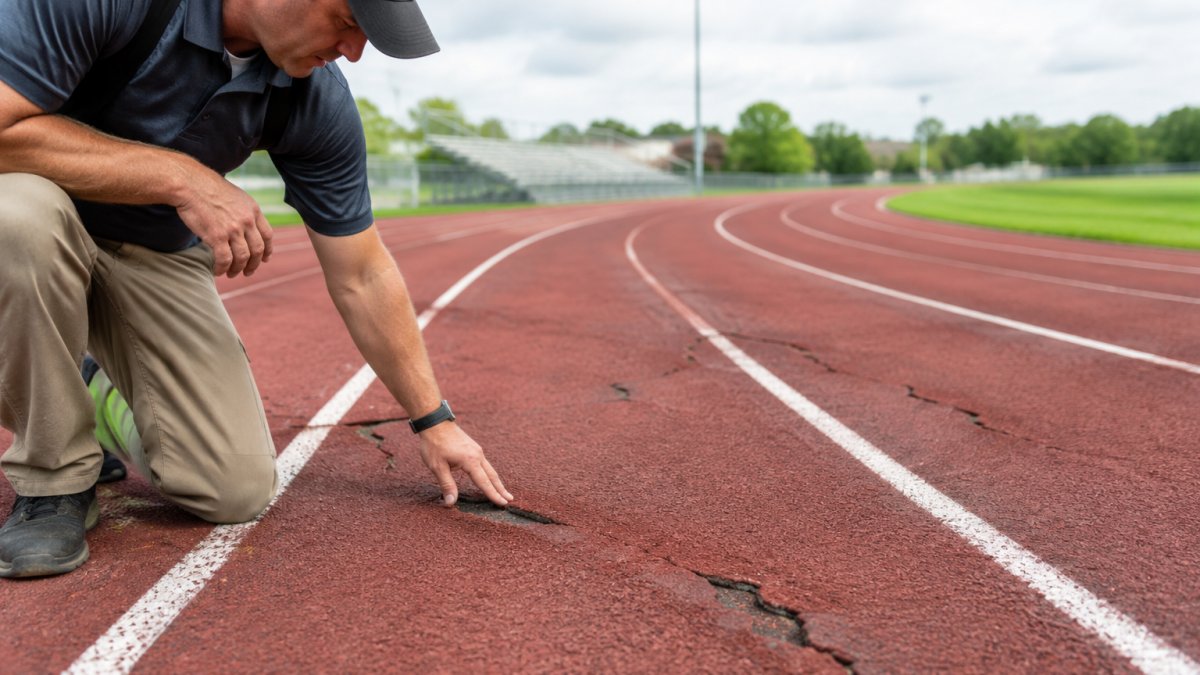
Slip hazards on a running track are easier to prevent than to fix after someone falls. Walking the full track before each practice or meet helps you check for water, loose debris, cracked or lifting surface, and spots where traction feels different.

Look for these warning signs during your walk:
- Standing water in low spots and along the inside lane
- Sand, grass clippings, or loose gravel near edges
- Cracks, bubbles, or raised seams
- Dull or shiny patches signaling wear or residue
- Areas that feel softer or harder underfoot
Log what you find and where. Repeat findings in the same spot usually point to a drainage or repair problem, not a cleaning problem.
The walk-through checks for these warning signs, and each finding should be logged by location.
| Warning sign | What to look for | Why it matters |
|---|---|---|
| Standing water | Low spots and the inside lane | Most common cause of slips |
| Loose debris | Sand, grass clippings, gravel near edges | Reduces traction |
| Surface damage | Cracks, bubbles, raised seams | Can trap water and worsen |
| Dull or shiny patches | Wear or residue | Signals slick areas |
| Soft or hard spots | Feel differently underfoot | Shows uneven surface |
Cleaning a Running Track Without Creating New Slip Risks
Cleaning removes what makes a track slippery, but the wrong method can leave a new film behind. Sweep first with a soft-bristle push broom, then rinse with clean water if your manufacturer approves.
Avoid these common mistakes:
- Oily or waxy cleaners that leave a slick film
- Pressure washing too close, damaging the top layer
- Wet residue left to dry in patches
- Sand-based products on synthetic surfaces
Check the manufacturer’s maintenance guide before choosing any cleaner. Many surfaces need only water and gentle sweeping.
Managing Drainage, Standing Water, and Repair Before Your Next Practice
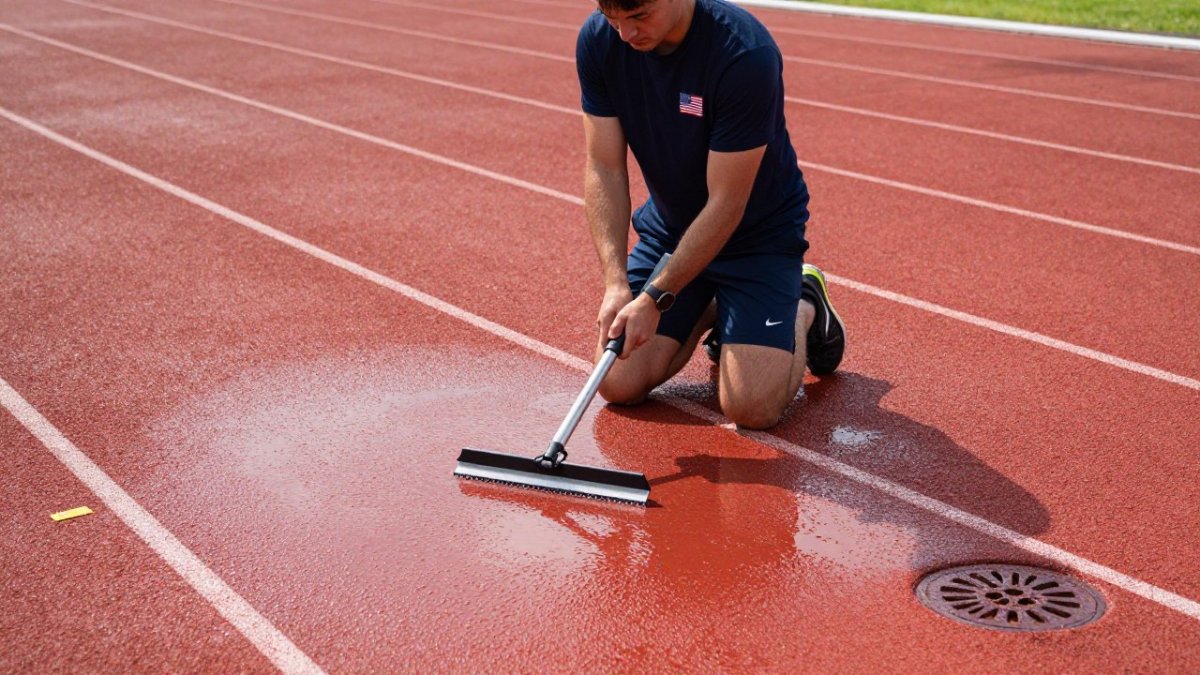
Standing water is the most common cause of slips on a track. Clear clogged drains, check that the track slopes away from lanes, and cone off low areas until they dry.
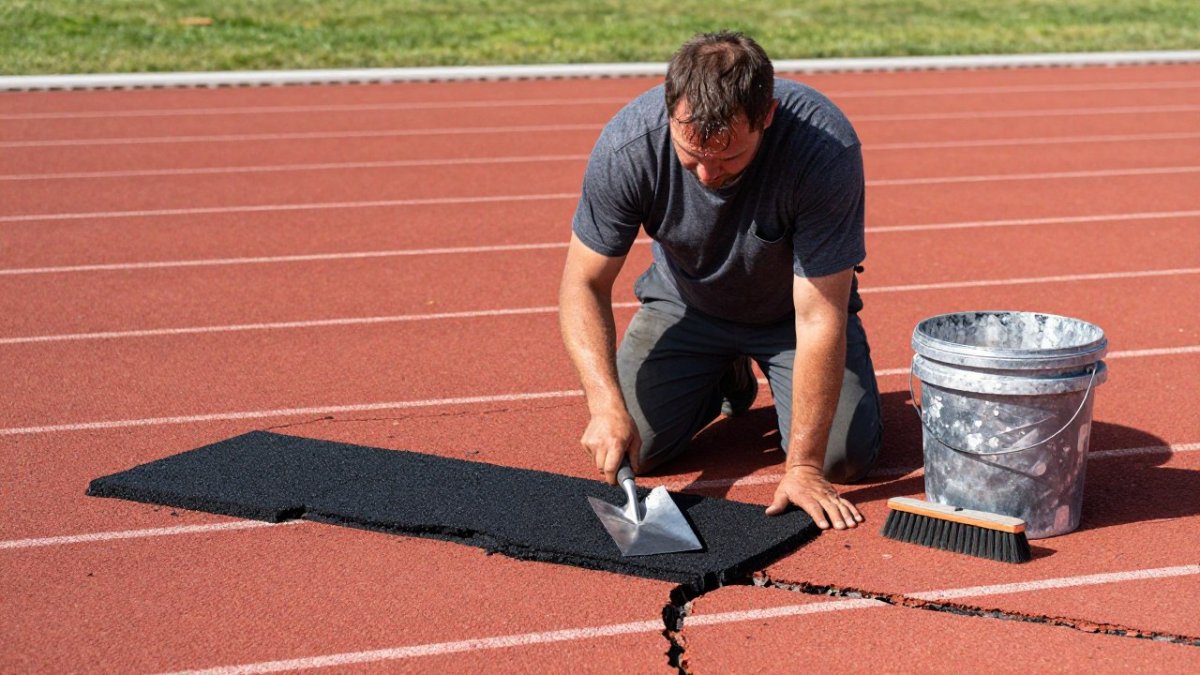
Repair small cracks and worn spots promptly so water can’t seep in and cause larger problems. If you’re weighing a low-maintenance alternative to the track, explore the advantages of turf installation for year-round play. If the surface is lifting, pooling water repeatedly, or breaking up, consult a qualified track contractor. For a real-world example, see how a hazardous track was returned to safe use. To see whether resurfacing or restoration is the right repair option, learn how resurfacing can extend your track’s lifespan.
Frequently Asked Questions
How can you prevent slips on an athletic track?
Keep the surface clear and dry. Sweep sand, grass clippings, and debris off the lanes before each use, and remove standing water with squeegees or pump-out equipment after rain. Inspect the surface regularly for loose patches, worn traction, and pooling, and close any affected section until it is cleaned or repaired. Athletes should wear running shoes with intact soles and secure laces, and coaches should avoid scheduling sprints on a visibly wet or frosted lane.
How often should a running track be inspected for safety hazards?
Inspect the track at the start of each day it is used, and after any rain, frost, or heavy use. A more thorough walkthrough using a written checklist should happen at least monthly during the season and before the start of each season. Record what you find, the date, and who completed the inspection, so that problems such as cracking, pooling, or worn traction can be tracked and scheduled for repair.
What causes athletic tracks to become slippery?
Common causes include standing water after rain, morning frost or ice, sweat and spills, and debris such as sand, mowed grass, and leaves blown onto the lanes. Surface wear over time can also reduce traction on synthetic tracks. Drainage problems that let water pool in low spots are a frequent underlying cause, so checking where water collects after rain is an important part of prevention.