Quick Summary
Subbase failure usually appears on the surface first, as long straight cracks or small square crack networks, soft spots, low areas that hold water, bubbles, sunken lanes, and peeling edges. Wide or repeating cracks and standing water that won’t drain point to a deeper problem.
- Check the track after heavy rain or a hard winter to spot early warning signs.
- Long straight cracks or small square crack networks point to movement in the layers below.
- Water that lingers for hours after rain suggests the settled base cannot drain.
- Wide cracks or cracks that reappear after filling usually indicate a structural problem, not a surface one.
- Call a professional when you see deep cracks, widespread soft spots, or water that never drains.
Table of Contents
- Visual Warning Signs of Subbase Failure
- Running Track Cracks and Surface Issues: Cosmetic or Structural?
- Running Track Drainage Problems and Standing Water
- Running Track Subbase Inspection: How to Check It Yourself and When to Call a Professional
- Frequently Asked Questions
Visual Warning Signs of Subbase Failure
Most subbase failure shows up on the surface first. Walk the track after a heavy rain or a hard winter, and look for the patterns below. Each one points to a deeper problem in the layers under the rubber.
- Cracks that run in long, straight lines or form a network of small squares (Chapter 1. Distresses for Pavements With Asphalt Concrete Surfaces – Distress…)
- Soft spots that give slightly under foot
- Low spots that hold water for hours after the rain stops
- Bubbles or raised patches on the surface
- Lanes that have sunk compared with the lanes next to them
- Surface pieces that lift or peel at the edges
- Faded or shifted line markings in one area only
Last Updated: November 19, 2026
The article lists the surface signs that point to a deeper subbase problem, and what each one suggests.
| Warning sign | What it points to |
|---|---|
| Long, straight cracks or a network of small squares | Movement or failure in the layers below |
| Soft spots that give under foot | Weakened subbase beneath the surface |
| Low spots that hold water for hours | Settled base unable to drain |
| Bubbles or raised patches | Lifting caused by layers underneath |
| Lanes sunk relative to neighbouring lanes | Uneven settlement of the base |
| Surface pieces lifting or peeling at edges | Loss of bond with the base |
| Faded or shifted line markings in one area | Localised surface or base movement |
Running Track Cracks and Surface Issues: Cosmetic or Structural?
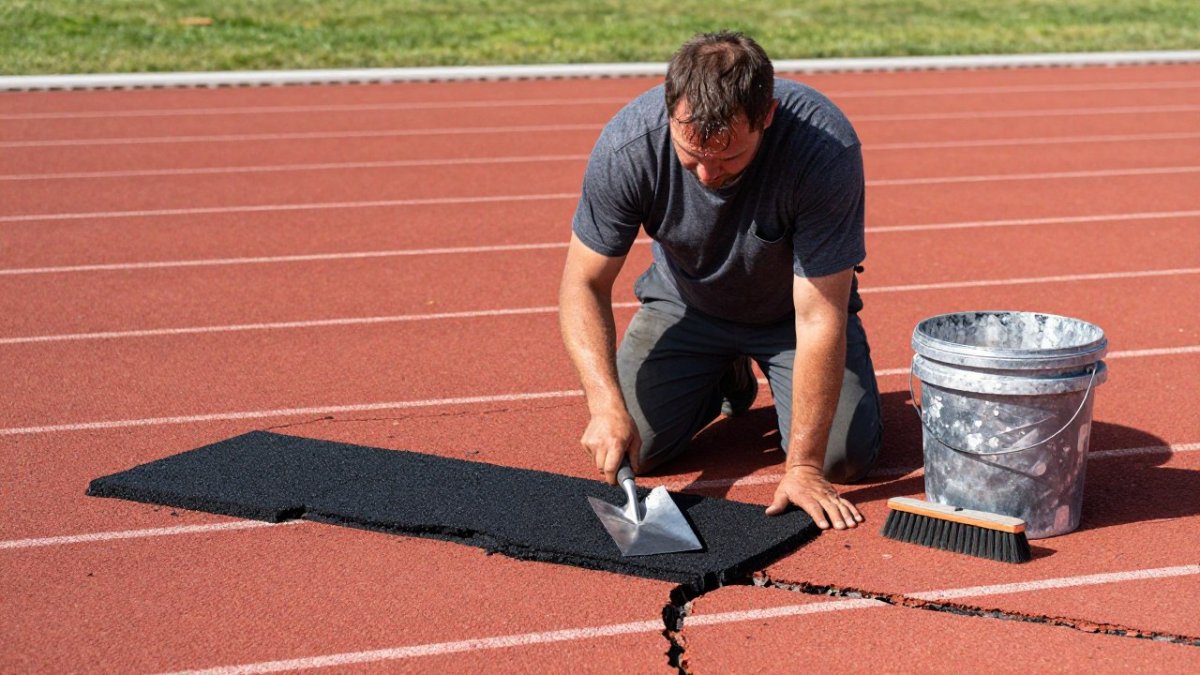
Not every crack means the subbase has failed. Hairline cracks in the surface are often cosmetic, caused by UV exposure and normal aging. Wide cracks, or cracks that repeat in the same spot, usually point to movement underneath. Watch out: a crack that reappears after you fill it is almost always a structural problem, not a surface one. Persistent fissures demand a deeper investigation into the underlying pavement integrity, a process often clarified by the technical expertise of Utah Sealcoat & Striping.

Running Track Drainage Problems and Standing Water
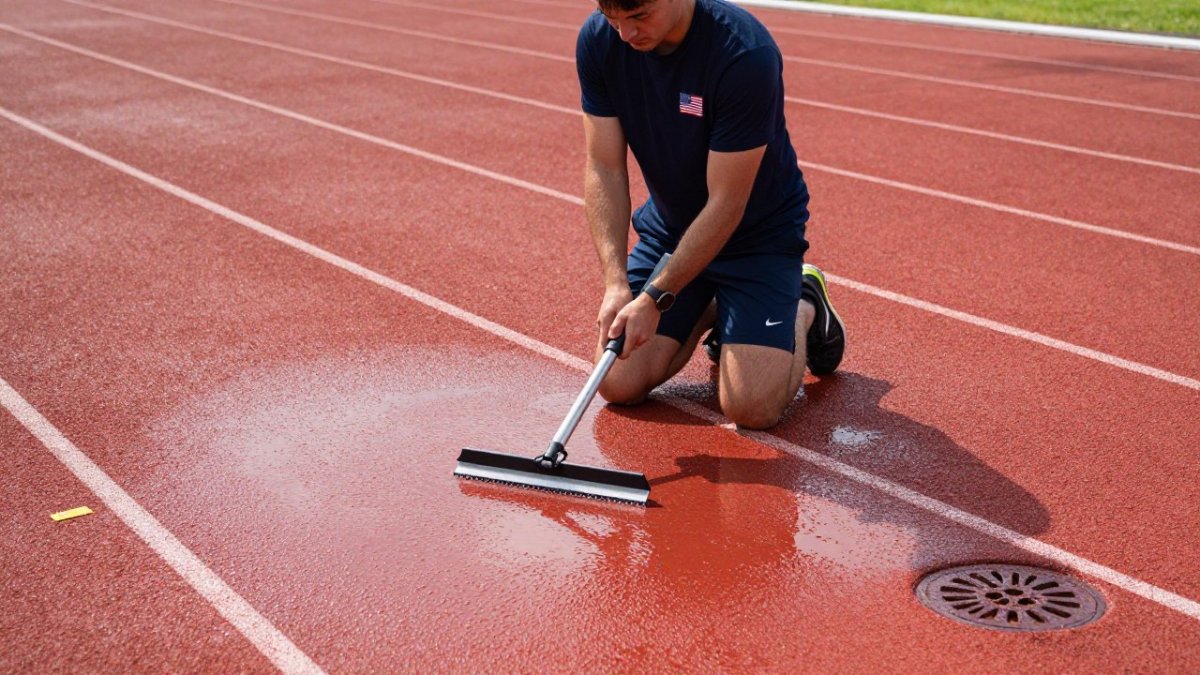
Water that pools on the track is one of the clearest signs of subbase trouble. When the base has settled or lost permeability, water cannot drain through it. Check the lowest points of each lane after rain, and note how long the water stays. If water is lingering, you can read about stopping water from pooling on the track.
Running Track Subbase Inspection: How to Check It Yourself and When to Call a Professional
You can check a few things yourself. Look for the warning signs above, mark each one, and note where it appears. For a quick visual reference, see a visual guide to telling when a school track needs repair. Once you have finished, you can follow a step-by-step method to confirm the track’s remaining lifespan. Take photos and dates so you can see if conditions are getting worse.
Call a professional when you see deep cracks, widespread soft spots, or water that never drains. If you have reached that point, this buyer’s guide to choosing a qualified builder explains what to look for.
Ready to find out what your track needs? GET A FREE ASSESSMENT from TDRATHLETICS.
Frequently Asked Questions
How much does it cost to resurface a track?
Resurfacing cost depends on track size, the surface system chosen, lane count and whether the subbase needs repair first. TDRATHLETICS does not publish standard prices because every project is scoped individually. Pricing depends on quantity, dates and delivery. For current prices or a quote, contact TDRATHLETICS or use the GET A FREE ASSESSMENT option on its website.
Can a track be resurfaced if its subbase is failing?
Usually not on its own. A new surface layer bonded to a failing subbase will crack or delaminate again within a short time because the movement underneath transfers upward. The subbase has to be tested and repaired or rebuilt first, then resurfaced. A proper inspection identifies whether the failure is limited to a few sections or spread across the whole track, which determines whether repair or replacement makes more sense.
Can standing water indicate a problem with a running track’s subbase?
Yes. Water that pools for hours after rain often means the subbase has lost its permeability, the grade has shifted, or the drainage layer beneath the surface is clogged or collapsed. Surface cracks alone do not explain persistent pooling. Checking whether water drains at the edges, inspecting low spots for soft ground and comparing wet and dry areas helps separate a drainage fault from a surface defect.