Last Updated: November 17, 2026
Quick Summary
Track resurfacing for schools typically costs a few dollars to over ten dollars per square foot, depending on scope and surface system. A structural spray on a sound base costs far less than a full scrape and new mat, which suits a failing base. Resurfacing usually costs 40% to 70% less than a new build when the base is in good condition.
- Structural spray is quoted at $4 to $8 per square foot, versus $8 to $15 for full polyurethane resurfacing.
- Structural spray suits a sound base with only surface wear; a failing base needs a full scrape.
- Resurfacing a track in good structural condition costs 40% to 70% less than a full new build.
- Compare bids on annualized lifecycle cost, not the lowest upfront price.
- Plan a 10% to 15% contingency for base problems hidden under the old surface.
Table of Contents
- What Track Resurfacing Costs for a School Today
- Comparing Polyurethane, Latex and Other Surface Options
- Telling Whether Your Track Needs Repair or Replacement
- Planning the Timeline and Budget for a School Track Project
- Preparing a Track Resurfacing Bid Checklist for Your Next Step
- Frequently Asked Questions
Resurfacing a school running track is one of the largest athletic facility expenses a district will face, so the cost of track resurfacing for schools deserves a clear, honest answer before any bid comes across the desk. This guide walks through what drives the price, how the main options compare, and how to decide between repair and replacement. We have written it for athletic directors, facilities managers, and school board members who need to plan a project on a realistic budget.
What Track Resurfacing Costs for a School Today
Resurfacing cost depends mainly on the scope of work, the surface system chosen, and the area being covered.
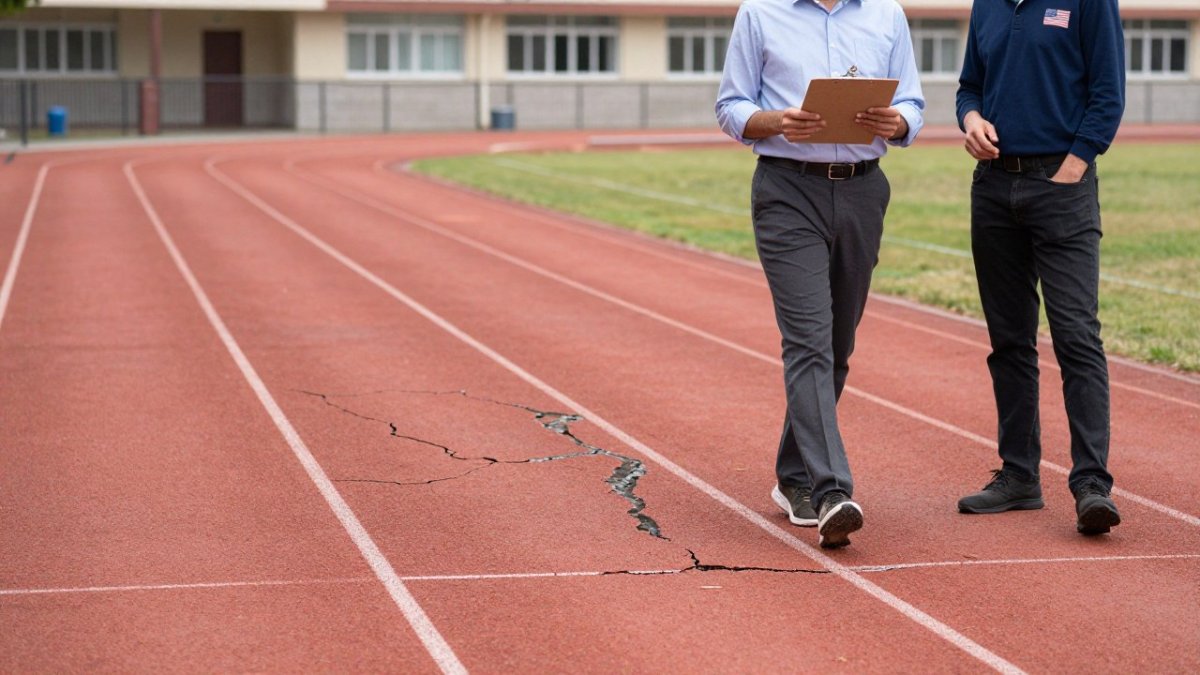
A common planning mistake is comparing a resurfacing bid to the price of a new track without accounting for the base’s condition. A track in good structural condition is usually far cheaper to resurface than to rebuild.
Pricing is quoted by project, and the final figure depends on quantity, dates, and delivery. Our buyer’s guide to hiring professional track builders covers scheduling and budgeting a project. For current figures tailored to your track, request an assessment from TDRATHLETICS.
Structural Spray Versus Full Scrape and New Mat
Structural spray and full scrape-and-new-mat are the two most common resurfacing approaches, and they differ sharply in scope. A structural spray adds a new layer over a base that is still sound, which keeps costs lower. Full scrape-and-new-mat removes the old surface down to the base and installs a fresh system, which costs considerably more. Pro Track & Tennis running track resurfacing cost guide
Choose structural spray when the base shows only surface wear and minor cracking. Learn how resurfacing restores a worn track without a full teardown. Choose a full scrape when the base is failing, when pooling water points to drainage problems, or when the existing surface has delaminated.
WATCH OUT: Ask any contractor to document the base condition before you accept a scope. Our guide to spotting contractor upselling before you sign lists the warning signs to check. A spray applied over a failing base will fail early and cost you the full project later.
Price Ranges by Square Footage and Surface Type
Per-square-foot pricing lets a district compare bids on a common basis. One provider lists structural resurfacing at $4 to $8 per square foot and full polyurethane resurfacing at $8 to $15 per square foot. Byrne & Jones running tracks resurfacing estimates
Confirm in writing whether lane markings, drainage work, and mobilization are part of each bid.
Comparing Polyurethane, Latex and Other Surface Options
The surface material affects both the upfront price and how long the track lasts, and for a school district the second number often matters more than the first. Polyurethane systems are a common choice for competition-grade tracks, and they often cost more than latex-based alternatives. Ask every bidder to state the exact system and product line they will install, so you can compare like with like.
| Surface Option | Relative Upfront Cost | Typical Service Life | Typical Best Use | Main Tradeoff |
|---|---|---|---|---|
| Structural spray | Lowest | Roughly 5 to 8 years | Sound base, surface wear only | Does not fix a failing base |
| Full polyurethane resurfacing | Highest | Roughly 10 to 15 years | Competition-grade, long service life | Higher upfront investment |
| Latex-based systems | Mid-range | Roughly 6 to 10 years | Budget-limited district | Shorter expected life, more frequent recoating |
| Sandwich or textured systems | Mid to high | Roughly 8 to 12 years | Multi-use school facilities | Surface can be less forgiving for sprint events |
Typical Service Life
Those service-life figures are planning ranges most practitioners use, not warranties. Confirm the manufacturer’s published warranty and the installer’s workmanship warranty separately, because a long product warranty does nothing if the base fails underneath it.
Lifecycle Cost, Not Sticker Price
The number that should drive a school board vote is total cost of ownership, not the low bid. A simple way to compare two bids is to divide the installed cost by the expected years of service to get an annualized cost, then add the maintenance you will actually fund over that period.
A common pattern: a latex system may come in well below a full polyurethane system on the bid sheet, but if it needs recoating or patching sooner, the annualized cost can close the gap or reverse it. Run the math on your own square footage before you present options to the board, and show the annualized figure next to the upfront figure in the board packet.
Environmental and Safety Considerations
School boards increasingly ask about material composition, and it is a fair question. Ask bidders whether the system is water-based or solvent-based, what the volatile organic compound content is, and how the manufacturer handles end-of-life material.
On safety, confirm the surface meets the standards your state high school athletic association applies for competition, and ask for the installer’s test results on surface hardness and traction.
Use this table to frame the discussion with your board, then confirm actual product specifications, warranty terms, and maintenance schedules in each bid. Lifecycle cost, which weighs upfront price against years of service and upkeep, often matters more than the lowest bid.
Telling Whether Your Track Needs Repair or Replacement
Start with a visual inspection and a few simple checks. Look for cracking that runs through the surface, areas where the top layer lifts or peels, and low spots that hold water after rain. Surface wear alone usually points toward resurfacing, while cracking through to the base or persistent pooling suggests deeper problems. Our visual guide to track damage warning signs shows what each condition looks like. Miller Sports running track surface repair guidance
A track that has been resurfaced several times may be a candidate for a full rebuild instead. Compare the cost of another resurfacing against the cost of a new build, which one provider places at $300,000 to $1,200,000 for a full new track. Sports Venue Calculator running track construction cost guide Resurfacing a track in good structural condition typically costs 40% to 70% less than a full new build, according to the same guide. For lower-cost options, see affordable restoration solutions that last.
Run the Lifecycle Math Before You Decide
The repair-or-replace call is really a total-cost-of-ownership question. Build a simple five-year and ten-year view for each option: upfront cost, expected maintenance and patching, and the year you would next have to resurface or rebuild. A resurfacing that buys eight years at a lower price can beat a rebuild that buys twenty years at a much higher price, or lose to it, depending on how many resurfacing cycles you would fund in between.
Watch out: a contractor who recommends a full rebuild without documenting base failure in writing, with photos and core samples, is asking the district to spend capital money on a hunch.
How Districts Actually Pay for It
Many school track projects are funded through capital improvement budgets, sinking funds, or voter-approved bond measures, and the funding path shapes the decision as much as the engineering does. A resurfacing often fits inside an annual facilities budget; a rebuild usually requires a capital request or bond cycle. That timing matters: if a bond measure is two years out, a structural spray may be the right bridge, provided the base can carry it.
Grant and fundraising options exist but vary by state and program year. Confirm eligibility, matching requirements, and deadlines with your state agency before you build a grant into the project budget.
Get the Assessment in Writing
Our recommendation is to resurface when the base is sound and replace when the base is failing. An honest assessment should explain which situation applies to your track, document the evidence, and lay out the annualized cost of each option. It should not push you toward the most expensive choice.
Planning the Timeline and Budget for a School Track Project
School schedules limit when work can happen. Many districts schedule resurfacing for summer, when fall sports and the school year are not affected. Build the timeline backward from your first practice date, and include time for curing, line painting, and final inspection before athletes return.
Set a contingency in your budget. Hidden base problems often surface only after the old surface is removed, and a contingency of 10% to 15% is a common planning allowance.
Write substantial completion dates and liquidated damages into the contract, and require a weekly schedule update during construction.
If you are weighing several bids, keep the schedule commitment in mind. A lower price means little if the work runs into the fall sports season.
Preparing a Track Resurfacing Bid Checklist for Your Next Step
A consistent checklist makes bids easier to compare. Include these items in your request for proposals:
- Documented base condition assessment and proposed scope (spray or full scrape)
- Exact surface system and product specifications
- Itemized pricing: surface, base repair, drainage, line markings, mobilization
- Written schedule with completion date and penalties for delay
- Crew information, confirming in-house versus subcontracted labor
- Warranty terms and maintenance recommendations
- Two or more references from comparable school projects
Bidders who answer every item clearly are easier to evaluate. Bidders who leave items vague deserve follow-up questions before you award the project.
For a district comparing bids today, the most useful next step is a site assessment that tells you whether you need a resurfacing or a rebuild. Request yours to get a clear, recommendation-based view of your track’s condition and the options that fit your budget.
Frequently Asked Questions
How much does it cost to resurface a track?
Costs depend on the resurfacing method and the track’s area. Costs depend on the resurfacing method, the track’s area, and the scope of work. Request a site-specific quote before setting a budget. Site conditions, drainage work and base repairs can change the final figure, so request a site-specific quote from TDRATHLETICS before setting a budget.
How long does a rubberized track last?
A well-maintained rubberized track typically needs resurfacing after a number of years of heavy use, with lifespan shaped by climate, traffic, maintenance habits and the surface system installed. UV exposure, cracking and delamination are the main signs of wear. Regular cleaning, prompt crack repair and avoiding heavy equipment on the surface all extend service life. A structural assessment helps determine whether the base still supports a resurfacing rather than a full rebuild.
How can a school tell whether its track needs repairs or full resurfacing?
Start with a condition assessment. Surface cracks, minor pooling and worn lane markings often call for repair or a structural spray. Widespread delamination, base failure or drainage problems usually point to a full scrape and new mat. Compare the assessment against your budget and athletic calendar before deciding.