Last Updated: October 30, 2026
Quick Summary
Running track rubber wear analysis is the practice of inspecting a synthetic track’s surface to find where and how it is breaking down, so problems can be fixed before they become expensive. Surfaces can look fine while the rubber underneath has already lost its ability to absorb impact. Early detection separates a maintenance line item from a full resurfacing bid.
- Score each lane 0-4 at fixed reference points and track the scores year over year.
- Lanes one and two near the inside rail usually wear fastest.
- Calculate an annual wear rate; above 0.5 points per year in a lane signals a controllable cause.
- Photograph each reference point from the same spot and angle every year to build a baseline.
- Base the repair-or-replace decision on measurements, not impressions.
Table of Contents
- Why Rubber Wear Analysis Matters for Running Tracks
- What Happens to the Rubber Surface Over Time
- Factors That Accelerate Wear on Your Track
- How to Measure Track Wear: Methods Compared
- Synthetic Track Maintenance Schedule for Long-Term Performance
- Track Resurfacing for Small School Districts: Repair or Replace?
- Frequently Asked Questions
Why Rubber Wear Analysis Matters for Running Tracks
Running track rubber wear analysis is the practice of inspecting a synthetic track’s surface to find where and how it is breaking down, so you can fix problems before they become expensive.
Athletic directors and facilities managers often treat track wear as cosmetic. Learn how resurfacing can extend your track’s lifespan when the wearing course is failing but the base is sound.
Wear analysis is not an annual luxury. It is the only reliable way to decide whether your track needs cleaning, repair, or replacement.
What Happens to the Rubber Surface Over Time
A synthetic running track is built in layers: a base, a cushioning layer, and a wearing course made of EPDM rubber granules held together by a polyurethane binder.
Over time, the binder that bonds the granules loses flexibility. The surface becomes more prone to micro-cracking, and granules begin to loosen. Once granules shed, the surface loses the uniform elasticity that makes a track feel consistent from lane to lane.
Binder breakdown and UV degradation
Sunlight is one of the main causes of binder failure. UV exposure gradually breaks down the polymer chemistry in the binder, reducing its structural integrity and tensile strength. The first visible sign is usually surface discoloration and chalking, followed by hairline cracks that widen over successive seasons.
Tracks in sunny, high-altitude, or heat-intensive climates often show binder breakdown earlier than tracks in milder regions.
Abrasion and lane wear patterns
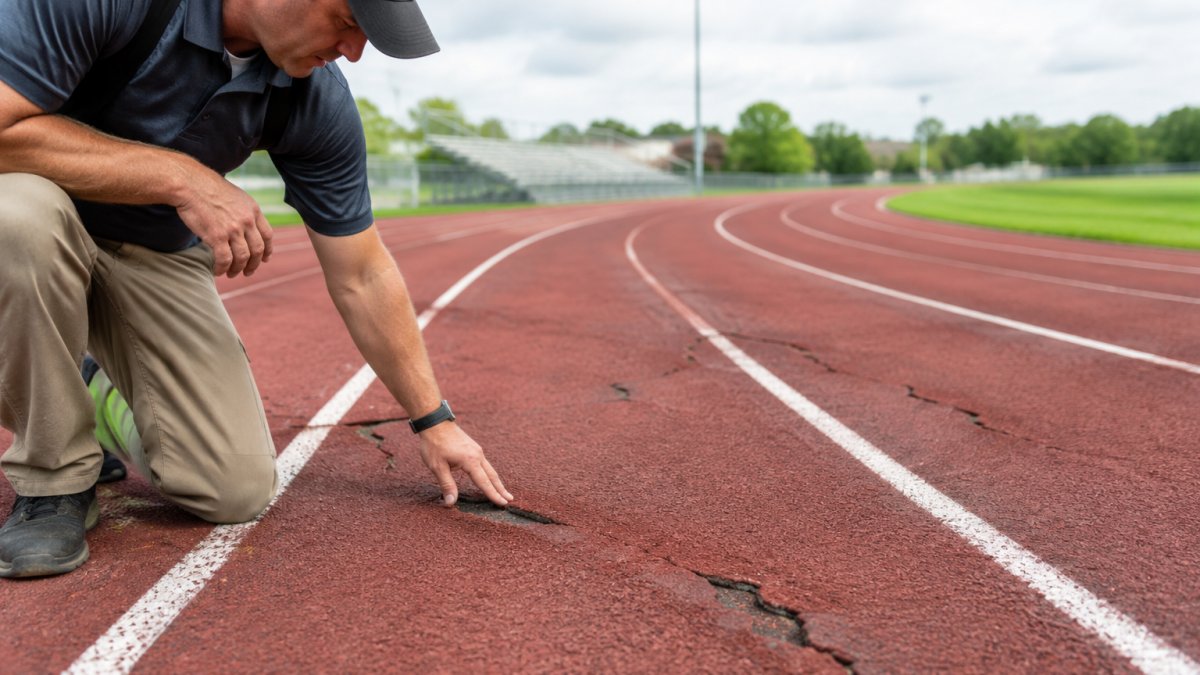
Abrasion produces a predictable pattern. Lanes one and two near the inside rail usually wear fastest because athletes run the tightest curves there, and sprinters push off hardest at the start. Look for bare patches, smoothed granules, and a glossy finish on high-traffic zones, those areas lose abrasion resistance first, and injury risk rises there.
Factors That Accelerate Wear on Your Track
Several variables speed up deterioration, and most of them are controllable.
- Cleaning method: High-pressure washing strips granules and damages binder. Gentle, approved cleaning methods extend surface life.
- Usage intensity: Daily practice, club events, and inclement-weather use concentrate wear. A track shared across multiple teams often ages faster than the original design assumed.
- Footwear and training surfaces: Metal spikes and dragged equipment cut into the surface. Enforcing spike rules and keeping gear off the track protects the rubber.
Wear is cumulative. A track rarely fails from one event; it fails from a combination of modest stresses that go unmonitored.
How to Measure Track Wear: Methods Compared
There is no single perfect method, and each has trade-offs in cost, precision, and what it can detect. The most useful approach often combines two or three.
| Method | What it measures | Strengths | Limitations |
|---|---|---|---|
| Visual inspection | Cracks, discoloration, bare patches | Fast, inexpensive, repeatable | Subjective; misses subsurface damage |
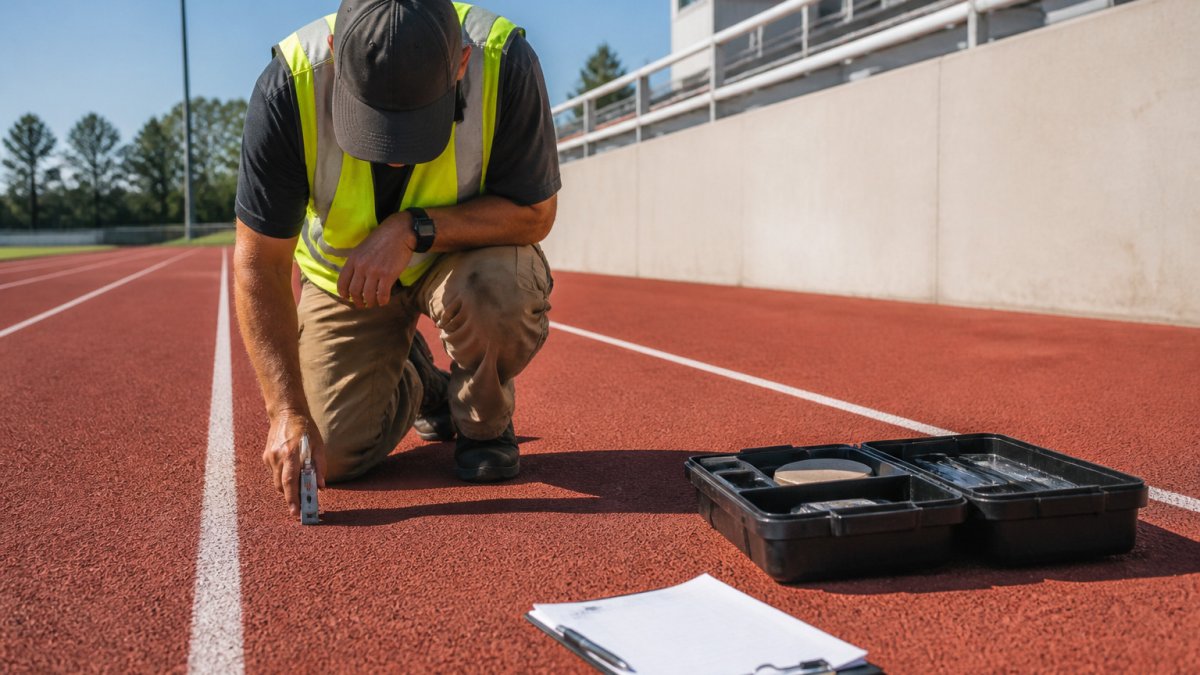
| Hardness/durometer testing | Surface firmness and binder condition | Quantifies change over time | Needs a baseline reading to be meaningful |
| Lane-by-lane mapping | Where wear concentrates | Shows priority repair zones | Time-consuming across full track |
| Impact/elasticity testing | Energy return and shock absorption | Connects wear to athlete performance | Requires specialized equipment and expertise |
| Core sampling | Layer thickness and bonding | Reveals base and subsurface failure | Destructive; limited number of samples |
A quantitative wear-rate framework
Most published guidance on running track rubber wear analysis stays qualitative: it tells you to “inspect regularly” without saying what normal wear looks like.
- 0, Like new: uniform granule color, no visible binder chalking, consistent texture underfoot.
- 1, Light wear: slight color fade, occasional loose granule, no bare patches.
- 2, Moderate wear: visible smoothed zones, scattered micro-cracks, granules beginning to shed at high-traffic points.
If your lane-one score is two grades above lane eight, the wear is usage-driven and localized; if all lanes score similarly, the driver is more likely environmental (UV, freeze-thaw, drainage). That distinction alone changes whether you repair or resurface.
Turning scores into a wear rate
Record the score at each reference point each year and calculate a simple annual wear rate: (current score − baseline score) ÷ years since baseline. A rate of about 0.25 points per year suggests normal aging; a rate above 0.5 points per year in a specific lane points to a controllable cause, usually cleaning method, spike damage, or a drainage defect, worth fixing before it spreads.
Photograph each reference point from the same spot and angle every year. Side-by-side photos are the cheapest baseline you will ever build, and they make year-over-year scoring far more defensible to a budget committee.
Numbered steps for a practical analysis:
- Document the track’s age, installation date, and past repair history.
- Walk the full surface and photograph each lane at fixed reference points, noting cracks, pooling, and bare zones.
- Score each lane 0-4 at each reference point and map the lanes with the most wear, especially inside lanes and start zones.
- Take hardness readings at the same fixed points and record them against your baseline.
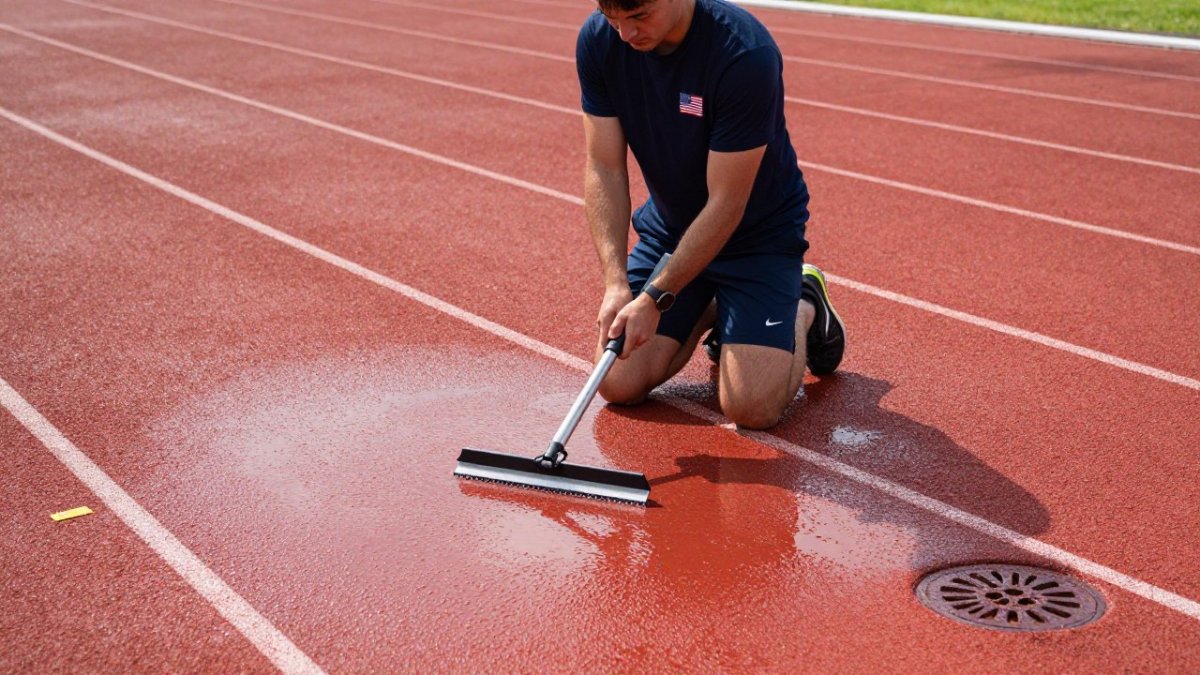
- Test for pooling and drainage performance after rain.
- Calculate the annual wear rate per lane and compare inside versus outside lanes.
- Decide whether surface work is enough or whether the base needs assessment.
Keep records. Wear analysis only becomes powerful when you compare this year’s readings against last year’s and can show a trend line rather than a single snapshot.
Synthetic Track Maintenance Schedule for Long-Term Performance
A sensible schedule catches wear while it is still cheap to address. Review our track and turf projects and the surfaces we have kept performing over time. The table below is a general framework; adjust frequency for your climate and usage.
| Interval | Task | Purpose |
|---|---|---|
| Weekly | Clear debris, check for spike damage | Prevents granule loss and surface cutting |
| Monthly | Visual crack and lane-wear survey | Catches early binder failure |
| Quarterly | Drainage check after rain | Identifies pooling before base damage |
| Annually | Full wear analysis with hardness testing and lane scoring | Tracks trend against baseline |
| Every 2-3 years | Professional assessment of surface and base | Determines repair versus resurfacing timing |
Keep cleaning gentle and use only manufacturer-approved products. Schedule repairs in the off-season where possible, because a track closed for weeks in fall can disrupt an entire sports calendar.
Climate-specific binder breakdown
Generic maintenance advice ignores the single biggest variable in how fast a binder fails: local climate. The same specification track can behave very differently depending on where it sits.
- Extreme heat and high UV: UV exposure and sustained high surface temperatures accelerate polymer breakdown in the polyurethane binder. Expect chalking and hairline cracking earlier, and shorten the interval between hardness readings. Shade structures and lighter-colored wearing courses can slow the process, but the schedule itself should tighten.
- Freeze-thaw cycles: Where water repeatedly freezes and thaws in micro-fissures, cracks widen seasonally and binder adhesion weakens. Drainage inspection matters more here than anywhere else, because trapped moisture drives failure. Fall inspections should focus on sealing hairline cracks before the first freeze.
- Heavy rain and humidity: Persistent moisture accelerates binder degradation and can mask base problems until they are severe. Quarterly drainage checks are a minimum, not a luxury.
Repair versus replacement: a decision matrix
This is where the analysis pays off. Smaller districts often operate under tight budgets, and the decision between repair and replacement can feel binary. In practice, it is a spectrum, and the measurements should drive it.
| Condition observed | Likely action | Rationale |
|---|---|---|
| Localized lane wear, sound base, working drainage | Targeted patch or lane repair | Wear is usage-driven and contained |
| Broad surface failure, sound base, no pooling | Resurfacing (replace wearing course) | Foundation is serviceable; surface is not |
| Base failure, structural pooling, delamination | Full replacement | Patching will not hold on a failing base |
| Isolated cracks that have not spread | Crack sealing | Cheap prevention before freeze-thaw widens them |
| Uniform wear across all lanes with no drainage issues | Resurfacing assessment | Environmental aging, not usage concentration |
Many districts assume they need replacement when a resurfacing would serve them well. See what a new track build looks like for a program of your size if the assessment points that way.
Do not let budget pressure drive the conclusion in either direction. A repair on a sound base protects your budget and your athletes; a patch on a failing base simply delays a larger cost. The right answer is the one the measurements support.
Our approach at TDRATHLETICS is to tell you what the track actually needs, including when that is less than you expected. You can request a free assessment to get a measured evaluation of your surface and a clear recommendation on repair, resurfacing, or replacement.
Track Resurfacing for Small School Districts: Repair or Replace?
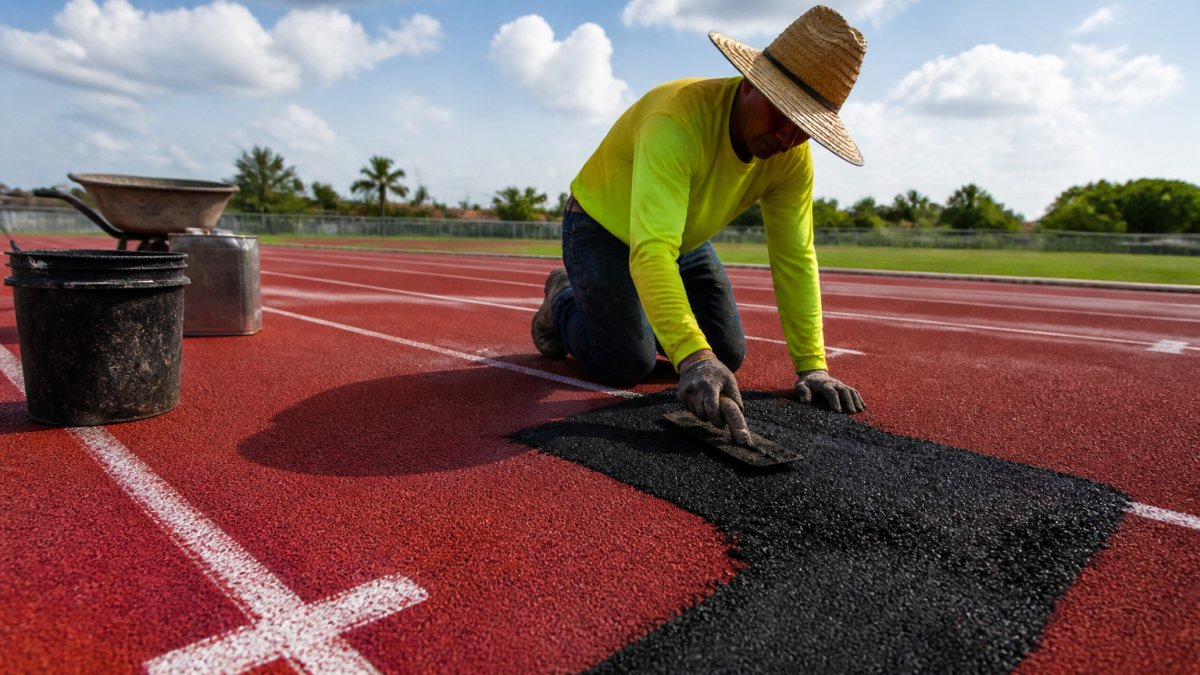
Repair is usually the right call when wear is localized: a few lanes with abrasion, scattered cracks that have not spread into the base, and drainage that works. See a real example of a stadium track repaired instead of replaced.
Our approach at TDRATHLETICS is to tell you what the track actually needs, including when that is less than you expected.
Frequently Asked Questions
How do you measure wear and tear on a synthetic running track?
Wear is usually measured by inspecting surface thickness, checking for cracking and surface hardening, and noting lane-specific patterns where runners concentrate their strides. Inspectors often combine visual surveys with physical measurements taken at marked test points. Comparing readings from one inspection to the next shows the wear rate, which is more useful for planning than a single snapshot. Records kept over several years make it easier to judge when resurfacing will be needed rather than reacting to failures.
What are the common signs of rubber degradation on athletic tracks?
The most common signs are surface cracking, loss of color and gloss from UV exposure, granules coming loose, and areas where the surface feels harder or less springy underfoot. Pooling water that does not drain, bubbling or lifting at seams, and worn patches along the inside lanes are also warning signs. Catching these early lets you address the cause before the damage spreads across the full track.
How often should a running track undergo a professional wear analysis?
Many facility managers schedule a professional assessment every one to two years, with a visual inspection each season. Tracks that host heavy daily use, or that sit in regions with intense sun and temperature swings, may benefit from more frequent reviews. An assessment before budget planning is especially useful, since it gives school boards and procurement officers concrete data to weigh resurfacing against repair.
Can a worn-out running track be repaired, or does it need full resurfacing?
Localized damage such as cracks, small pooling areas, or isolated worn lanes can often be repaired without a full resurface. When wear is widespread, the binder has broken down across much of the surface, or the base is compromised, full resurfacing is usually the more durable choice. A proper analysis separates these cases so you pay only for the work the track actually needs.