Quick Summary
A geosurfaces alternative should be judged on total lifecycle cost, not just the lowest installed bid. Compare each bidder’s installed cost, routine maintenance, resurfacing timing, and disposal on the same scope and assumptions over a defined horizon.
- Break every bid into four cost buckets: installed, maintenance, resurfacing timing, and disposal or replacement.
- Normalize all bids to the same scope, since bidders often leave out drainage, striping, or other items.
- Ask each contractor for a written maintenance schedule and the manufacturer’s resurfacing timeline.
- Confirm the contractor is an authorized installer and who is accountable for base preparation.
- Ask each bidder how many weather days are built into their schedule before you compare timelines.
Table of Contents
- Why School Districts Look for a Geosurfaces Alternative
- Running Track Surface Types Compared
- School Track Construction Cost and Lifecycle Value
- Track Surface Maintenance and Warranty Terms to Check
- Vetting Track Surfacing Contractors and Scheduling Your Project
- Requesting a Free Assessment for Your District’s Track
- Frequently Asked Questions
Why School Districts Look for a Geosurfaces Alternative
Many school districts start looking for a Geosurfaces alternative when a track project gets too expensive or the timeline slips.
A running track is a long-term asset. District boards want a surface that stays safe and usable for years, not just one season.
Districts usually weigh three things: the surface system, the contractor’s track record, and how the project fits the school calendar. Get all three in writing before you compare bids.
Running Track Surface Types Compared
Track surfaces fall into a few broad families, each with trade-offs in cost, durability, and weather handling. Ask any contractor which system they install and why it suits your site. You can see examples of the track and turf work we have completed as a reference point.

Confirm the exact system with the contractor and the manufacturer’s specifications.
Polyurethane and Latex Systems
Neither is automatically right, the choice depends on your budget, use pattern, and competition level.
Don’t compare only the square-foot price. Ask each bidder what the warranty covers, how long the system should last, and what routine care it needs.
Site, Climate and Use-Case Suitability
Climate and site conditions matter. Drainage, freeze-thaw cycles, sun exposure, and the base beneath the surface all affect performance. A track that works in a hot, dry region may need a different approach in a wet or cold one.
Before choosing a system, walk the site with the contractor and ask how the design handles your local conditions.
School Track Construction Cost and Lifecycle Value
Construction cost is the number most boards see first, but it’s only part of the picture. Lifecycle value covers installation, expected service life, routine maintenance, and eventual repair or resurfacing.
Pricing depends on track size, base condition, drainage work, the surface system, and schedule. Because those vary widely, TDRATHLETICS does not publish a standard price; we provide a site-specific quote after assessing your facility.
The Four Cost Buckets to Compare
A defensible lifecycle comparison puts every bidder’s number into the same four buckets:
- Installed cost. Surface material, base preparation, drainage, striping and event markings, mobilization, and demolition or disposal of the existing surface. Ask each bidder to break the lump sum into these line items.
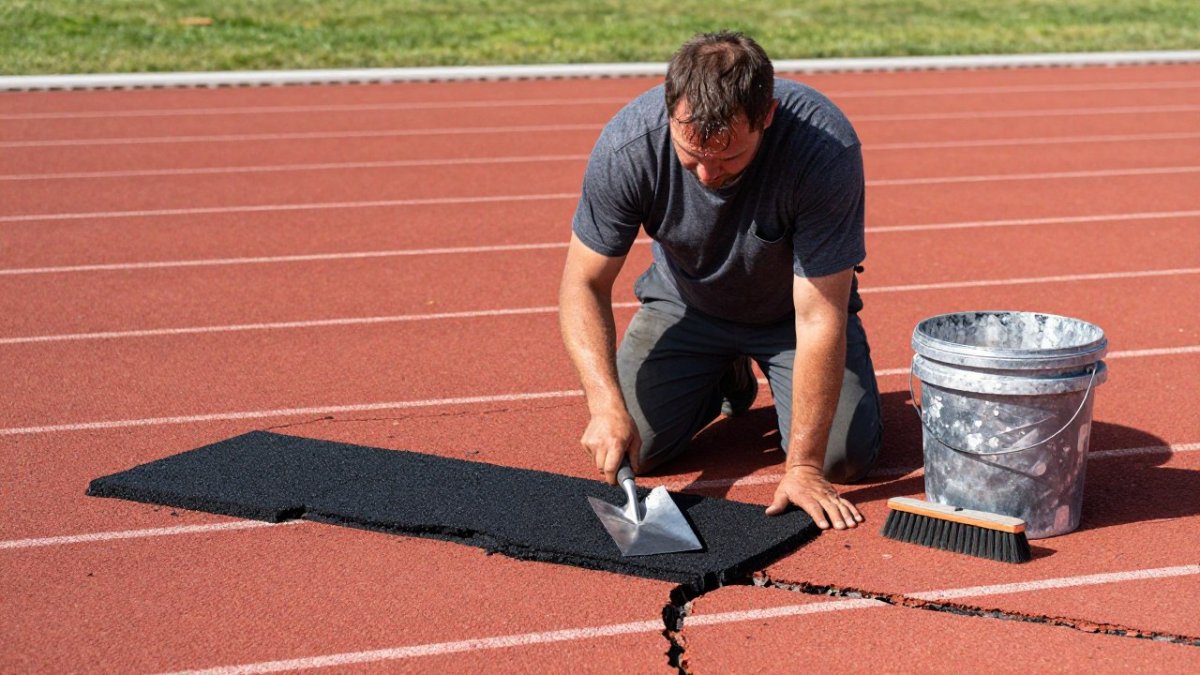
- Routine maintenance labor and materials. Cleaning, debris removal, crack and seam repair, and any periodic recoating the manufacturer requires. Get the manufacturer’s written maintenance schedule and price labor against your grounds crew’s rate.
- Repair and resurfacing timing. Most systems need resurfacing or top-layer restoration at some point. Ask when their system typically needs it, what it costs as a percentage of the original install, and whether the base must be reworked at the same time.
Building a Board-Ready Comparison
Put the four buckets into a spreadsheet with one column per bidder and one row per year of the comparison horizon. Enter the installed cost in year zero, annual maintenance each year, resurfacing cost in the year each bidder says it’s needed, and disposal/replacement at the end of the horizon. Total the columns. A slightly higher initial price can make sense if it extends usable life or pushes resurfacing out several years, the spreadsheet will show that, and a low bid with frequent repairs will show the opposite.
Watch out: bidders often quote different scopes without saying so, one includes drainage, another excludes it, one prices striping separately. Normalize every bid to the same scope before comparing totals.
Funding Cycles and Multi-Site Bidding
District capital planning rarely funds one track at a time. If you’re replacing surfaces at multiple schools, ask bidders to price multi-site and single-site packages separately. A single award can simplify scheduling and warranty administration. Match the bid timeline to your funding cycle, many districts need board approval in spring to break ground after the school year ends, and confirm each bidder can hold pricing through that window.
Climate, Site, and Use Intensity as Cost Drivers
Two districts can get very different quotes for the same square footage because site conditions differ. Drainage corrections, base repair, freeze-thaw exposure, shade and sun load, and use intensity all move the number. Keeping those assumptions consistent also makes it easier to compare how different surface choices, including A1 Terrazzo, fit each school’s conditions and patterns of use.
The article breaks lifecycle cost into four buckets that every bid should be normalized against.
| Cost bucket | What it covers | What to ask each bidder |
|---|---|---|
| Installed cost | Surface, base prep, drainage, striping, mobilization, removal | Break the lump sum into line items |
| Routine maintenance | Cleaning, debris removal, crack and seam repair, recoating | Get the manufacturer’s written maintenance schedule |
| Repair and resurfacing timing | When resurfacing is needed and what it costs | When the system needs resurfacing and its cost as a percentage of install |
| Disposal and replacement | End-of-life removal and full replacement | Disposal and replacement cost at the end of the horizon |
Track Surface Maintenance and Warranty Terms to Check
Routine maintenance keeps a track safe and extends its life.
Read warranty terms closely: what’s covered, for how long, and what voids coverage. Ask whether repairs are handled by the same crew that installed the track.
Resurfacing can extend a track’s life when the base is sound. You can learn how resurfacing can extend your track’s lifespan before deciding.
Vetting Track Surfacing Contractors and Scheduling Your Project
Most top-ranking surfacing guides stop at material selection. What actually determines whether a district gets a usable track on opening day is vendor evaluation and scheduling, so treat this section as your procurement checklist.
Contractor Evaluation Checklist
Ask every bidder the same questions in writing and keep the answers in the bid file:
- Crews and supervision. Does the contractor use its own crews or subcontract? Who is the on-site supervisor, and will that person be on your project? Subcontracting isn’t automatically disqualifying, but know who is accountable for base preparation, since surface failures often trace back to the base.
- Comparable references. Ask for references from completed K-12 projects of similar size and scope, with a contact name and phone number. Call them. Ask about schedule performance, punch-list responsiveness, and whether the surface has needed repairs since installation.
- Manufacturer authorization. Confirm the contractor is an authorized installer for the proposed system, with the manufacturer’s written confirmation. An unauthorized installer may not be able to register the warranty in the district’s name.
Warranty Terms to Read Closely
Warranty language varies more than most districts expect. Check what’s covered (material only, labor, or both), for how long, and what maintenance the district must perform to keep coverage in force. Look for exclusions around base failure, drainage, vandalism, and improper cleaning. Ask whether repairs are handled by the same crew that installed the track, and confirm in writing who is accountable for base preparation and drainage.
Scheduling Milestones
Schedule matters as much as quality. Ask for a written timeline with milestones: notice to proceed, mobilization, base work, surface installation, cure time, striping, and final inspection.
Watch out: cure and cure-weather windows are the most common source of slippage on track projects. Ask each bidder how many weather days they have built into their schedule, and compare that number across bids.
Getting to Award
Get at least three bids on the same written scope, with the same use assumptions and comparison horizon. Look for a contractor that gives an honest assessment, including a recommendation for a smaller job such as a repair or resurfacing when that fits. You can learn about The Track Doctor and the company behind the work before you reach out. Before you sign, confirm the final scope, schedule, warranty document, and payment schedule are attached to the contract, and that the district’s facilities team has signed off on the maintenance obligations the warranty requires.
Requesting a Free Assessment for Your District’s Track
The fastest way to compare your options is a site visit. TDRATHLETICS offers a free assessment. We look at the existing surface and your budget and schedule, then recommend what makes sense for your facility. Contact TDRATHLETICS to request your free assessment and get a written plan you can take to your board. You can also see what building a new track involves before you start.
Frequently Asked Questions
What are the best track surface options for school districts?
Most school districts choose between polyurethane-bound rubber systems, latex-based surfaces and rubber-granule surfaces with a polyurethane top coat. Polyurethane and latex-based systems differ in cost and maintenance needs, so compare them on your own climate and budget. The right choice depends on your climate, expected foot traffic, whether the track serves competitive meets, and the budget you can commit over the surface’s life. A Geosurfaces alternative should be judged on these same factors, not only on the brand name. Ask each bidder for references from districts similar to yours in size and climate.
How long does a school track surface typically last?
A well-installed and maintained school track commonly remains in service for roughly ten to fifteen years before it needs resurfacing, though service life varies with climate, drainage, usage levels and maintenance discipline. Freeze-thaw cycles, standing water and heavy use shorten the lifespan. When comparing track contractors, request documented service-life estimates, the warranty length and what the warranty actually covers. Verify those claims with installed projects you can visit.
What should a school district look for in a track surfacing contractor?
Look for contractors who explain whether they self-perform the work or rely on subcontractors, since that affects scheduling control and accountability. Request a site assessment before pricing, so the recommendation reflects your existing track’s condition. Check references from school districts of comparable size, confirm insurance and bonding, and ask how they handle schedule slippage during the school year. A recommendation that matches the actual condition of your track, rather than defaulting to the most expensive option, is a good sign.
What maintenance does a school track surface require?
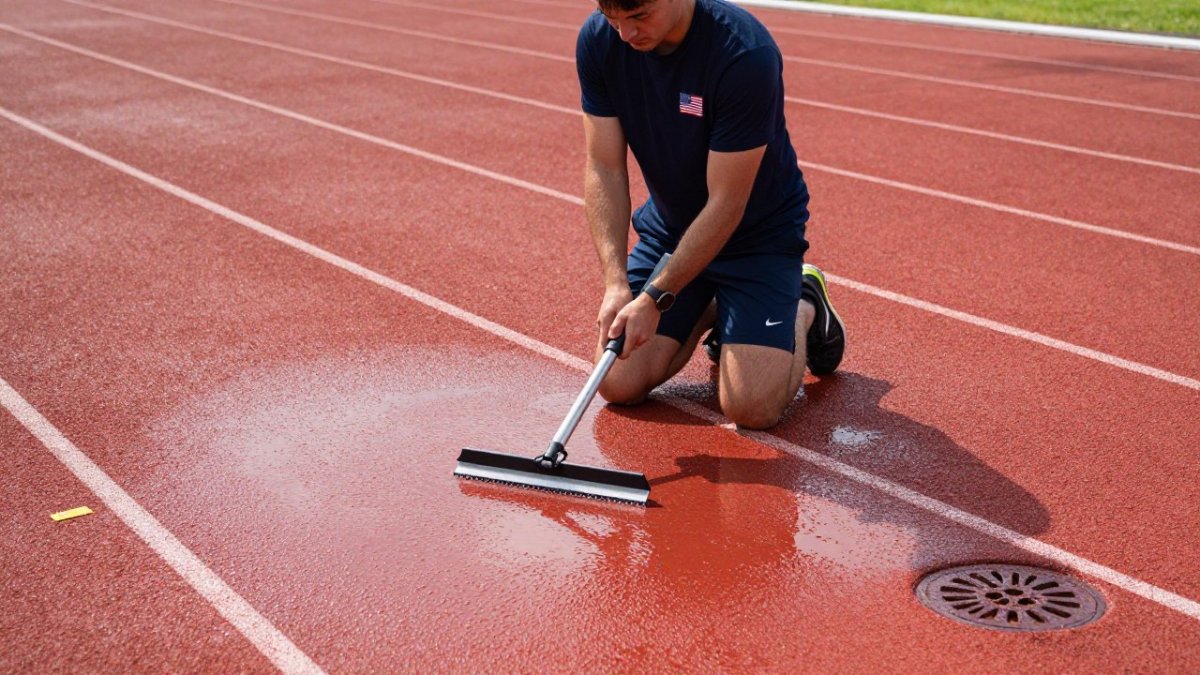
Routine maintenance includes regular sweeping and debris removal, prompt drainage clearing, inspection for cracks, bubbles and edge separation, and periodic cleaning according to the manufacturer’s guidance. Minor crack repairs and spot patching are typically handled early to limit larger repairs. Ask prospective contractors for a written maintenance schedule and a list of recommended cleaning products, and factor the annual maintenance budget into your lifecycle cost comparison.