Last Updated: November 22, 2026
Quick Summary
Track surface repair works well for a few isolated cracks on an otherwise sound surface, where the cracks are cleaned and filled. When cracking is widespread, lanes are faded, or the surface is delaminating, resurfacing is usually the better choice, and any movement or soft spots in the base must be fixed first.
- Walk the full track and mark every crack, low spot and bare patch before choosing a repair.
- Do not patch over a crack that keeps returning, since base movement will split the new material.
- Press a flat hand on bubbles or soft areas; loose material underneath is a warning sign.
- Use crack repair for a few isolated cracks; choose resurfacing when wear covers much of the track.
- Resurfacing cost varies with track size, surface system, scope of repair and base work needed.
Table of Contents
- Running Track Surface Inspection: Finding the Real Problem
- Track Surface Crack Repair vs. Resurfacing: How to Choose
- Running Track Resurfacing Cost and Polyurethane Track Maintenance After Repair
- Frequently Asked Questions
Running Track Surface Inspection: Finding the Real Problem
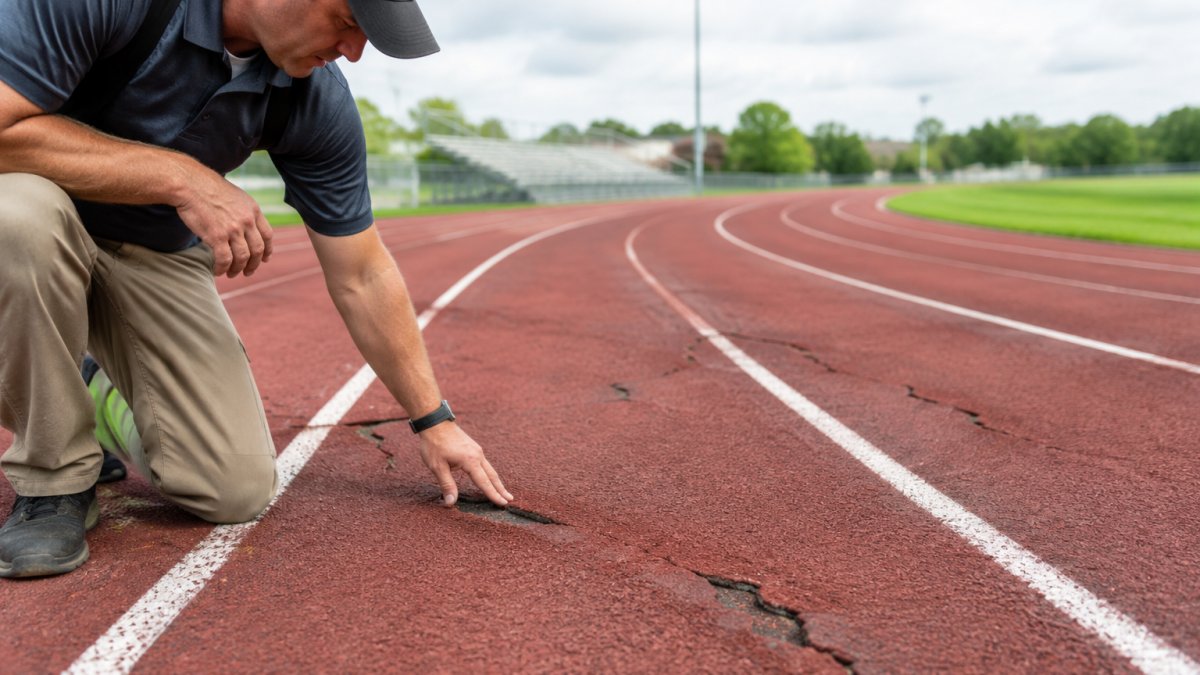
Every track surface repair should start with an honest inspection. Cracks, bubbling and worn lanes look similar from the grandstand but have different causes: a surface crack in polyurethane often means movement in the base, while worn lane lines usually point to surface wear alone.
Walk the full track and mark every crack, low spot and bare patch, checking the curves and most-used lanes first. Use this visual guide to signs your school track needs repair to know what to look for. Press a flat hand near any bubble or soft area, since loose material underneath is a warning sign.
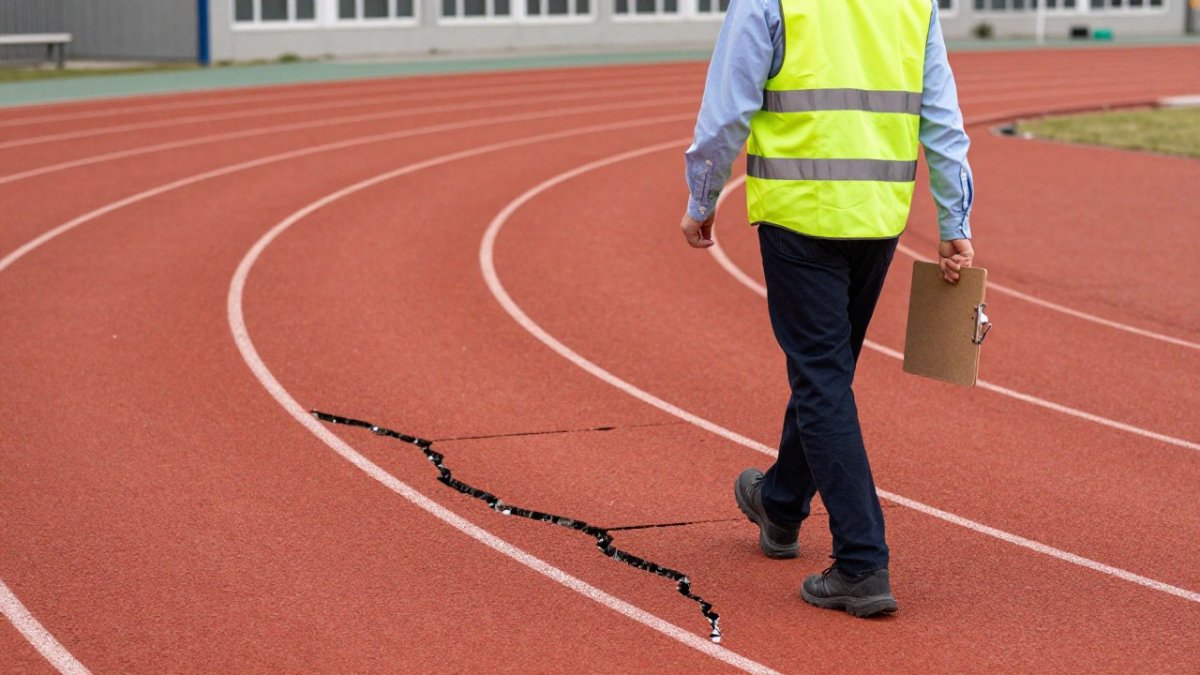
Watch out: do not patch over a crack that keeps coming back; movement underneath will split the new material within a season.
Track Surface Crack Repair vs. Resurfacing: How to Choose
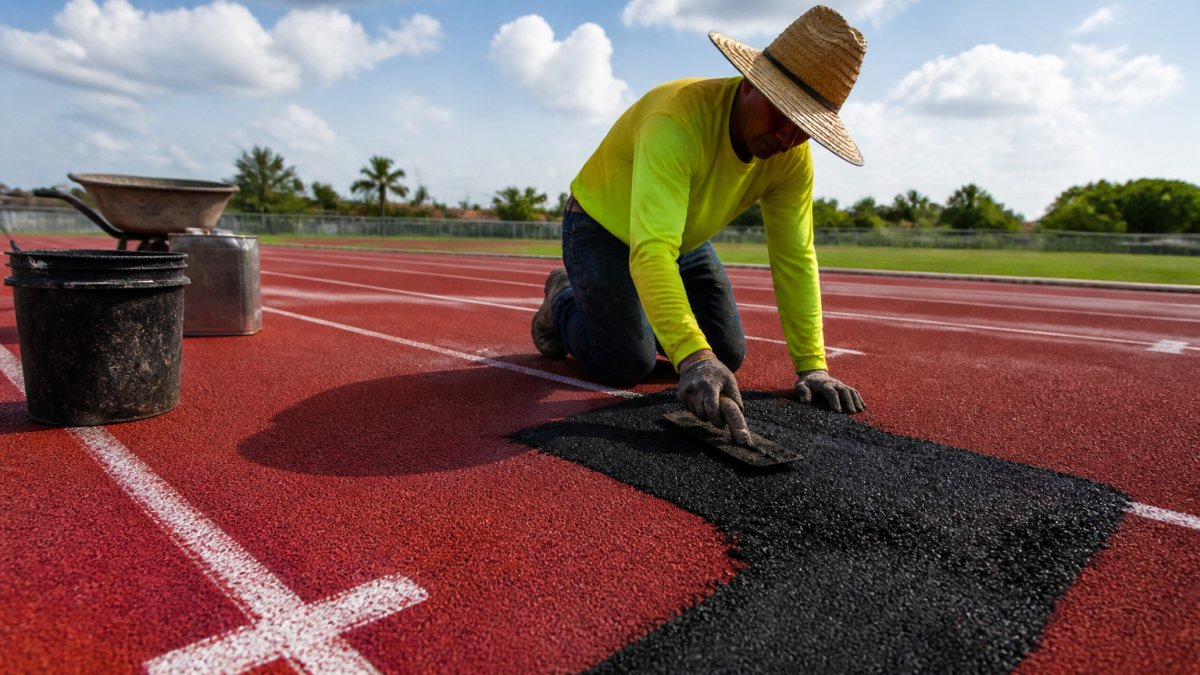
Crack repair suits damage limited to a few isolated cracks on an otherwise sound surface. The crack is cleaned out and filled, but it stops working once cracks are widespread or the surface is delaminating.
Resurfacing makes sense when wear covers much of the track, lanes are faded, or the surface has lost its grip. Whether patching or resurfacing is right depends on how much of the track is failing.
| Condition | Usually Best Option | Why |
|---|---|---|
| A few isolated cracks | Crack repair | Surface is otherwise sound |
| Widespread cracking | Resurfacing | Patches will keep splitting |
| Faded lanes, worn grip | Resurfacing | Wear covers the full track |
| Movement or soft spots | Fix the base first | Surface repair will not hold |
Running Track Resurfacing Cost and Polyurethane Track Maintenance After Repair
Resurfacing cost depends on track size, the surface system, the scope of repair and the work needed underneath, so pricing varies by project. If the track has reached the point of needing a full rebuild, you can review new track construction options. Contact TDRATHLETICS for a quote.
After any repair, keep the surface clean, remove debris, and check each season for new cracks. Early attention to small cracks helps protect your investment.
For current pricing and an assessment of your track, GET A FREE ASSESSMENT with the TDRATHLETICS team.
Your track deserves a repair that lasts. TDRATHLETICS inspects the surface and the base, then recommends the repair that fits your budget and schedule. Request your free assessment today and get a clear plan before the next season starts.
Frequently Asked Questions
What are the signs that a running track needs repair?
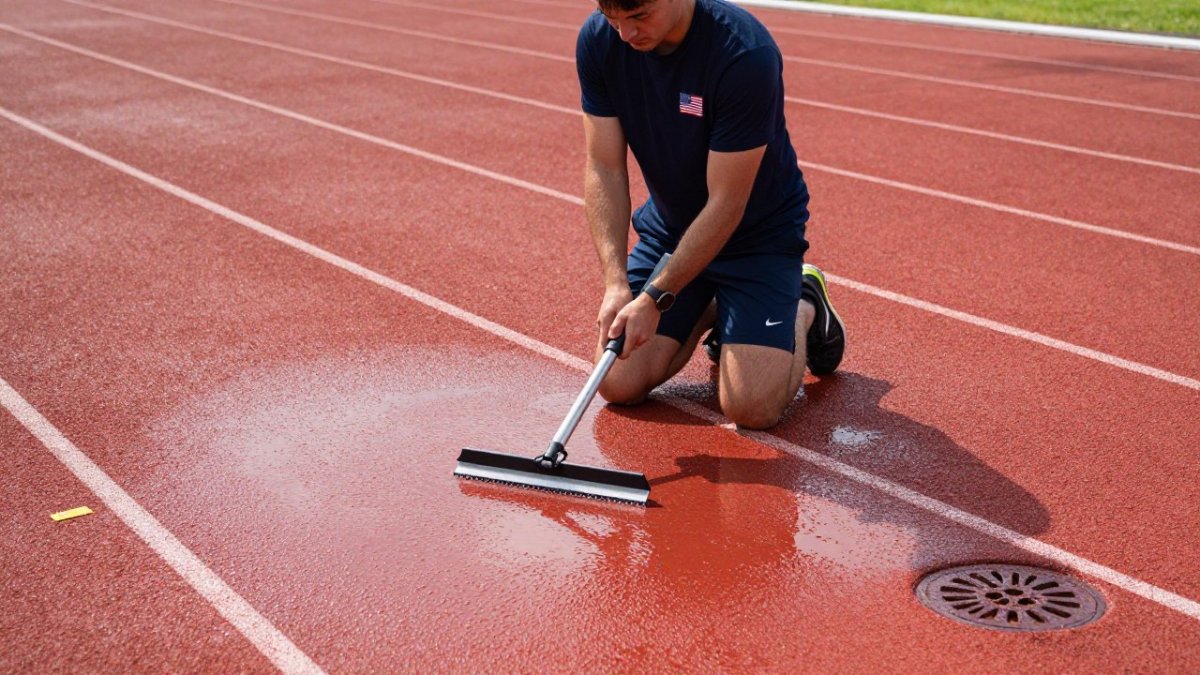
Common signs include visible cracks, bubbling or lifting of the surface, worn patches where the color has faded or rubber granules are missing, and pooling water after rain. Surfaces that feel uneven or inconsistent underfoot also warrant an inspection. Walk the full lane length and note any area that changes texture. Early identification keeps a small crack from becoming a larger failure that requires more extensive work and a bigger budget.
Can a damaged running track be repaired without resurfacing the entire track?
Yes, in many cases. Localized crack patching and edge repairs can address isolated damage without replacing the whole surface. Repair is usually appropriate when the base is sound, damage is limited to specific areas, and the surface has useful life left. Widespread cracking, delamination, or drainage problems in the subbase generally point toward resurfacing. A qualified inspection determines which approach fits your track’s condition.
How much does it cost to repair or resurface a running track?
Pricing depends on track size, surface system, extent of damage, drainage conditions, and project timing, so no single figure applies to every facility. Localized repairs are typically far less expensive than full resurfacing. For current pricing tailored to your track, contact TDRATHLETICS for a quote.