Last Updated: November 14, 2026
Quick Summary
Preventing water pooling on running tracks means keeping surface and subsurface drainage clear and confirming the track slope still sheds water. Clear grates and channels before storms, test drain flow with a bucket, and mark puddles after rain. Puddles that return in the same spot or survive 48 hours signal a grading or base problem, not a cleaning issue.
- Walk the track within 24 hours of soaking rain and mark every puddle by lane and distance.
- A puddle surviving 48 hours or more points to a blocked outlet or a base that cannot move water.
- Pour a cup of water on a dry section and time it; beading or pooling over a minute or two means surface failure.
- Fall calls for weekly leaf removal, since leaves are the top cause of clogged drains.
- Any grate a runner crosses should sit flush, with no lip that can catch a toe.
Table of Contents
- Why Water Pools on Running Tracks: Causes and Warning Signs
- Running Track Drainage Solutions That Work
- How to Inspect a Running Track for Drainage Problems
- Running Track Maintenance After Rain: Seasonal Prevention Routines
- Clearing Clogged Track Drains and Preventing Recurrence
- Schedule a Professional Drainage Assessment Before the Next Season
- Frequently Asked Questions
Why Water Pools on Running Tracks: Causes and Warning Signs
Water pooling on running tracks is the visible result of a drainage system that can no longer move stormwater away fast enough.
Most guides treat puddling as a cleaning issue. It is a structural one.
Water pooling shows up in predictable ways:
- Puddles that stay in the same spot for days after rain
- Standing water along lane edges or near the curb
- Soft, spongy spots underfoot
Each one points to a different failure. The location of the puddle tells you more than its size.
Surface vs. Subsurface Drainage Failures
Surface drainage moves water off the top of the track through slope, channels, and grates. Subsurface drainage collects water that has already entered the track base through pipes and stone layers below.
Water pooling mid-lane suggests surface drainage; a whole track that stays soft and soggy suggests the subsurface system. The fixes differ sharply, and guessing wrong wastes money.
The Role of Slope, Grading, and Base Settlement
A track needs a slight, consistent slope so water runs off instead of sitting. When the base settles unevenly, low spots form and water collects there.
Common culprits: poor compaction during original construction, tree roots or utility work disturbing the base, freeze-thaw cycles, and heavy use wearing down high points.
Grading problems rarely fix themselves; they worsen each season.
Running Track Drainage Solutions That Work
The right running track drainage solutions depend on where the water is coming from. Surface fixes handle runoff. Subsurface fixes handle water inside the base. Most problem tracks need both.
Surface Drainage: Trench Drains, Slot Drains, and Flush-Mounted Channels
Surface systems catch water before it soaks in. The three main types:
- Trench drains: open channels with grates, good for high-volume runoff
- Slot drains: narrow, low-profile openings flush with the surface
- Flush-mounted channels: sit level with the track so runners cross without tripping
A common mistake is a drain with a lip above the surface, a trip hazard and a dam in one. Flush-mounted, zero-lip transitions matter for runner safety.
Subsurface Drainage: French Drains and Perforated Pipe Systems
Subsurface systems use perforated pipe wrapped in filter fabric and set in gravel. Water enters the pipe and flows to an outlet.
The fabric is what most people miss. When it clogs with debris and fine soil, the whole system backs up, and a French drain that worked for years can fail quietly once the fabric seals over.
How to Inspect a Running Track for Drainage Problems
A running track drainage inspection is a diagnostic sequence that isolates why water is pooling before anyone spends money on a fix.
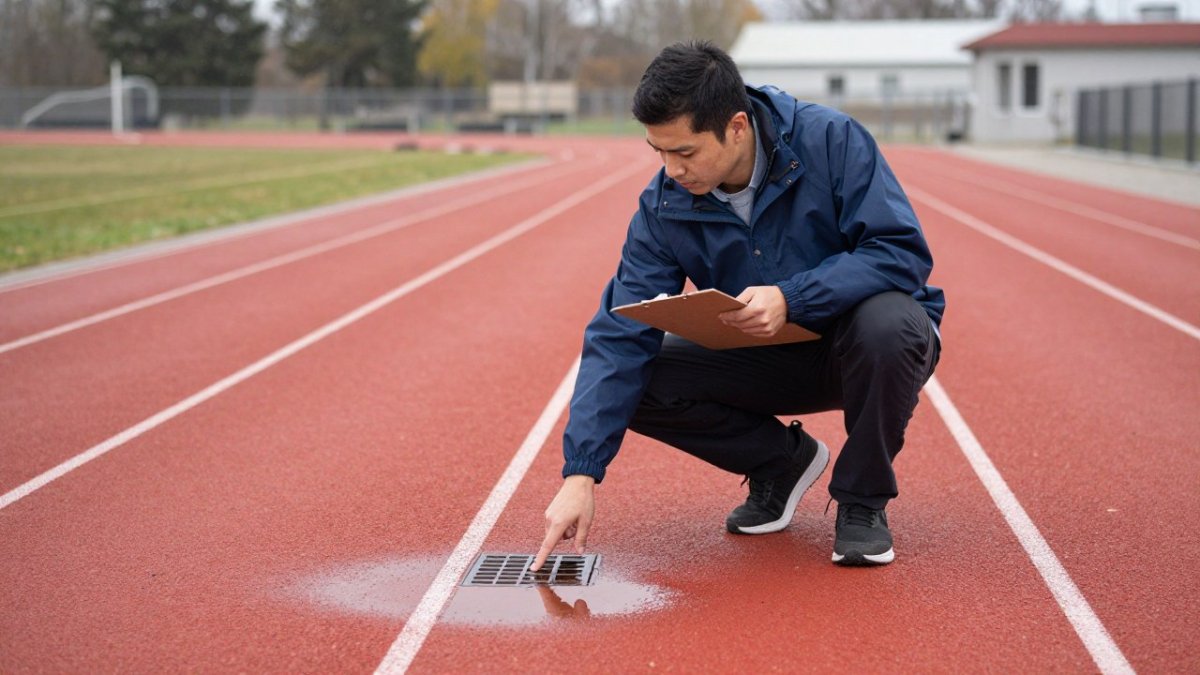
Step 1: Map the Puddles Before You Diagnose
Walk the full track within 24 hours of a soaking rain and mark every puddle with chalk or flags. Record location by lane and distance, approximate size, and drain time. A puddle clearing within hours points to a slow drain or minor low spot; one surviving 48 hours or more points to a blocked outlet or a base that cannot move water.
Step 2: Test Surface Grading and Slope
Surface drainage depends on a consistent slope carrying water to the track edge or a channel. Check it with a straightedge and level across the lane at several points, or a digital level. The exact cross slope belongs in your construction documents and should be confirmed with the designer. Look for flat spots, reverse grades, and dips at lane edges.
Step 3: Confirm Whether Drains Are Actually Receiving Water
A grate that looks clear can still be blocked below. Remove each grate, clear leaves and silt by hand, then pour a bucket of water into the channel and watch how fast it disappears. Slow flow means the line or filter fabric is clogged. Confirm every grate sits flush; a proud grate creates a dam and a trip hazard.
Step 4: Test the Porous Surface
When a porous surface glazes over with fines, rubber dust, and dirt, it can stop infiltrating and water may sheet across the top. Pour a cup of water onto a dry section in several places and time how long it takes to disappear. A surface that beads or pools water for more than a minute or two where it used to drain is a maintenance or resurfacing candidate, not a drain problem.
Step 5: Check the Base for Settlement and Movement
Press a shoe heel into soft spots and walk slowly, feeling for spongy areas and listening for hollow or crunching sounds. Look for cracks running toward drains, which often mark water moving through the base, and ripples or waves suggesting base movement. For a closer look, see our guide on signs your school track needs repair.
Reading the Results
Put the five steps together and the pattern tells you what to do. Puddles at lane edges with clear drains point to grading. Puddles near a single drain that will not clear point to a blocked line or fabric. Water sheeting across a dry-looking surface points to porous-surface failure. Soft spots and returning low spots point to base settlement. Log findings in one file, and if the same puddle returns after every storm despite clear drains, treat it as a design or base problem and call a specialist rather than repeating the cleaning cycle.
The inspection follows five diagnostic steps, each aimed at a different cause of pooling.
| Step | What to do | What the result points to |
|---|---|---|
| Step 1: Map the puddles | Walk the track within 24 hours of soaking rain and mark every puddle | Puddle surviving 48 hours or more points to blocked outlet or base |
| Step 2: Test grading and slope | Check slope with a straightedge and level across the lane | Water standing mid-lane while edges are dry means grading |
| Step 3: Confirm drains receive water | Remove grates, clear debris, pour a bucket and watch flow | Slow flow means the line or filter fabric is clogged |
| Step 4: Test the porous surface | Pour a cup of water on a dry section and time it | Beading or pooling over a minute or two means surface failure |
| Step 5: Check the base | Press a heel into soft spots and look for cracks toward drains | Returning low spots and soft spots point to base settlement |
Running Track Maintenance After Rain: Seasonal Prevention Routines
Running track maintenance after rain is mostly about clearing paths for water and catching wear early, but the routine only works if it is scheduled rather than remembered. A short, repeatable seasonal cycle beats a big repair later and gives you records to justify a repair when one is due.
Pre-Season, Routine, and Post-Storm Checks
Treat the year as three inspection rhythms rather than one annual cleanup.
- Pre-season (before the wet months): clear debris from every grate and channel, confirm each grate sits flush, test flow with a bucket at each drain, and note soft spots or new cracks. This prevents the first big storm from finding a blocked line.
- Routine (monthly during the season): remove leaves and silt from grates and channels, re-test flow at the drains that clog most often, and walk the track for new puddles or surface glazing.
- Post-storm: within 24 hours, mark and photograph standing water, clear debris from grates, and note whether puddles clear or persist. A puddle surviving 48 hours is a repair signal, not a maintenance item.
Seasonal emphasis still matters. Spring: clear winter debris and check for frost damage. Summer: post-storm inspection and silt removal after heavy rain. Fall: weekly leaf removal, since leaves are the top cause of clogged drains. Winter: watch ice in low spots and avoid plowing that gouges the surface.
The Repair Decision Tree
Not every puddle needs a contractor, and not every puddle can be cleaned away. Use a simple decision path.
- Clear the drain first. If the puddle sits near a grate, remove debris and test flow. Many puddles disappear here.
- Re-test the surface. If the drain flows but water still sheets, test infiltration with a cup of water. Slow infiltration means cleaning or resurfacing the surface layer.
- Check the grade. If water stands mid-lane with clear drains and a sound surface, grading is the issue and a localized regrade may be needed.
- Suspect the base. If the same low spot returns after every storm, the surface is soft, or cracks run toward drains, stop cleaning and call a specialist. Base settlement is structural work, not maintenance.
Steps one and two resolve most complaints; steps three and four are where budgets get committed. Knowing which step you are on keeps a small problem from being sold as a rebuild.
Keeping Drainage Work Safe for Runners
Any grate or channel a runner crosses should sit flush, with no lip that can catch a toe, slot drains and flush-mounted channels are preferred at lane crossings. During repairs, mark work zones clearly, keep them out of live lanes, and never leave open trenches or removed grates unattended.
Prevention is cheaper than repair, and a track that drains well also lasts longer and stays safer for runners. Our team at TDRATHLETICS builds these routines into every maintenance plan, and we put together a full guide on preventing slip hazards on athletic tracks if you want the deeper version.
Clearing Clogged Track Drains and Preventing Recurrence
Clogged track drains are the fastest way to turn a small puddle into a big problem. Clear them before the next storm, not after.
How to clear a clogged drain:
- Remove the grate and pull out leaves and debris by hand
- Flush the line with a hose to test flow
- If water backs up, the pipe or fabric is blocked and needs professional clearing
- Re-seat the grate flush with the surface
- Add the drain to a monthly check
Forcing a clogged line with high pressure can damage perforated pipe and filter fabric. If a hose does not clear it, stop and call a qualified professional.
Schedule a Professional Drainage Assessment Before the Next Season
Some drainage problems are beyond a checklist. If puddles return in the same spot, the base is soft, or water sits for days, it is time for a professional assessment.
TDRATHLETICS works on both restoration and new construction, and we aim to recommend what is right for your budget rather than the most expensive option. If surface damage is the issue, you can restore your track without a full teardown. If the base itself was built wrong, it may be time to build the track your program deserves.
Water pooling will not fix itself, and every wet season makes it worse. Get ahead of it before the next storm. TDRATHLETICS offers honest recommendations, in-house crews, and surfaces built to last for your athletes and your community.
Frequently Asked Questions
How can you prevent water from pooling on a running track?
Preventing water pooling starts with maintaining the surface slope and clearing debris from drains before every rainy season. Inspect the track after heavy rain for low spots, check that trench drains and slot drains flow freely, and schedule professional drainage evaluations if puddles persist longer than 48 hours. Keeping the track base stable and the surface porous where designed also helps water infiltrate rather than collect.
What causes puddles to form on a running track?
Puddles form when surface drainage cannot keep up with rainfall, often because of clogged track drains, compacted or worn porous surfaces, or settlement that creates low spots. Base movement and poor grading can also prevent runoff from reaching outlets. A track that was once fast-draining can develop standing water after years of use if routine inspection and maintenance are skipped.
When should a running track drainage problem be assessed by a professional?
Call a specialist when water pooling recurs after every storm, when puddles remain more than two days after rain, or when you notice sinking areas or cracks near drains. These signs often mean subsurface drainage is failing or the track base has settled. A professional assessment can determine whether the fix is surface repair, drain cleaning, or a larger restoration project.
Can clogged drains cause water to pool on a running track?
Yes. Leaves, silt, and debris block trench drains, slot drains, and perforated pipes, forcing water to back up onto the track surface. Regular clearing of drain grates and outlets, especially in fall, is one of the simplest ways to prevent pooling. If water still stands after clearing the visible debris, the clog may be deeper in the drainage system and require professional cleaning.